Cat® C7.1 Industrial Unit Powers Compost Machine For Mushrooms

  • Agriculture / Aquaculture

Cat’s Industrial Open Power Unit (IOPU) is a complete power package containing the engine and cooling package pre-assembled for straightforward installation into several OEM applications – one of which is used by Costa Group – Australia’s largest grower, packer and marketer of premium quality fresh fruit and vegetables including mushrooms.

“I was initially contacted by Costa Group’s Mushroom Exchange contract mechanic to help with an urgent replacement engine for their composting machine,” says EPSA Industrial Sales Representative, Steve Riley.

Nutrient-enriched compost is the essential food source for mushrooms and Costa ensure each of their farms around Australia has access to premium quality compost mix. They required an engine capable of producing around 150kW with the same interface drive (flywheel and housing) as their old engine.

“I determined that the Cat C7.1 168kW was a suitable replacement, complemented with a basic control panel. Our Western Australian workshop immediately built up and tested the package, which allows the customer to run their machine at its full capability with the extra power.”

Costa Group harvest in excess of 15.3 million fresh mushrooms per week and supply within 24 hours of harvest. They boast mushroom farms in Queensland, South Australia, Victoria, Tasmania and Western Australia, employing over 700 people.

Responding To Power Insecurity

  • Agriculture / Aquaculture

The Federal Government recently announced a $36 million program to pay households and businesses to turn down their air conditioning, furnaces and cool rooms during peak demand. This, combined with skyrocketing power prices and grid instability are sure signs of a power crisis in Australia. As Victoria, NSW and South Australia look to measures to prevent blackouts this summer, among the many trial projects, householders will be invited to voluntarily cut their energy use in return for incentives such as rebates on electricity. Other projects involve large-scale industrial and commercial businesses that will have hardware installed to automatically and remotely control and reduce energy. The Australian Energy Market Operator (AEMO) says there are opportunities for the energy sector to assist consumers through more targeted products and services, particularly in relation to managing their energy use during uncertain power supply. Among other strategies, this could potentially require investment in power generation options to ensure reliability and security of supply. EPSA is ready to respond and take action.

EPSA’s Senior Manager for Engines, Rental and Project Marketing, Marcel Heijkoop says, “At EPSA, we’re at the forefront of supporting businesses – large and small – and we’ll help customers prepare for what’s forecast to be a turbulent summer. “Our Cat® prime and standby power generators are available for hire or purchase as new or used and they suit any business or application backed by cutting-edge technology. We’re currently offering $21,000 (inc GST) genset packages fully installed and commissioned with Cat Finance packages for ABN holders.

“We also offer reliable HVAC equipment for temperature control – crucial for productivity, efficiency and safety in the workplace.”

Should businesses be adversely affected by brownout, blackout or summer storm, EPSA can supply emergency power immediately. EPSA provide urgent equipment 24/7 to minimise downtime during any unplanned outages.

EPSA Customise Cat® Gensets For Tassal’s Salmon Farming Needs

  • Agriculture / Aquaculture

Tasmanian Atlantic salmon thrive in the pure cool waters of one of the most pristine environments in the world, and salmon farms – circular pens supporting fishnets – are a common sight in the state’s waterways. EPSA’s Cat® Rental Power division supply XQE gensets to salmon producer Tassal for power generation on four of its fish farms.

Tassal says that preserving the marine environment and appropriately managing the visual impacts of its operations is imperative. This includes ensuring that equipment complies with regulations, with all floating infrastructure associated with the farming operations to be grey or black in colour. EPSA has been working with Tassal for two years and historically have painted our gensets grey to meet this requirement, and then re-paint at the end of each tenure, says EPSA’s Rental Branch Manager, Tas Topalidis.

“We do this to meet regulations to camouflage equipment so it is in harmony with its environment, and to avoid the gensets looking like a white beacon in the middle of the ocean.”

Tas says that the process was expensive and he sought to find a most cost-effective and innovative solution.

“Having previously worked in the rail industry, I knew the viability of vinyl covering on trains for advertising purposes and knew it was a durable enough material to hold up to weeks at sea and then be peeled off the gensets at the end of the project period. I proposed the idea to Tassal and we rolled out the first vinyl-covered gensets in April 2014. The feedback from Tassal was incredible.”

Caterpillar Named One Of Fortune's World's Most Admired Companies

If opportunities are the lifeblood of business, then it must be our people who are the most important component to shape success, says Steve Adamson, National Sales Manager for EPSA’s Rental division.

“An initiative such as this demonstrates the capabilities of EPSA people to deliver the best possible customer service and regional representation.”

Aquaculture is one of the fastest growing areas of food production in the world. According to the Tasmanian Seafood Industry Council, the farming of both Atlantic salmon and ocean trout in the Tasmanian marine environment has developed into the most valuable seafood industry in Australia, producing in excess of 48,000 tonnes per annum. Tassal is a leading producer of Atlantic salmon in Australia. It operates two salmon hatcheries, three processing facilities, two retail outlets and marine farms in six regions throughout Tasmania.

Cat®-powered Grape Harvesters Developed In The Murray-darling Region

  • Agriculture / Aquaculture

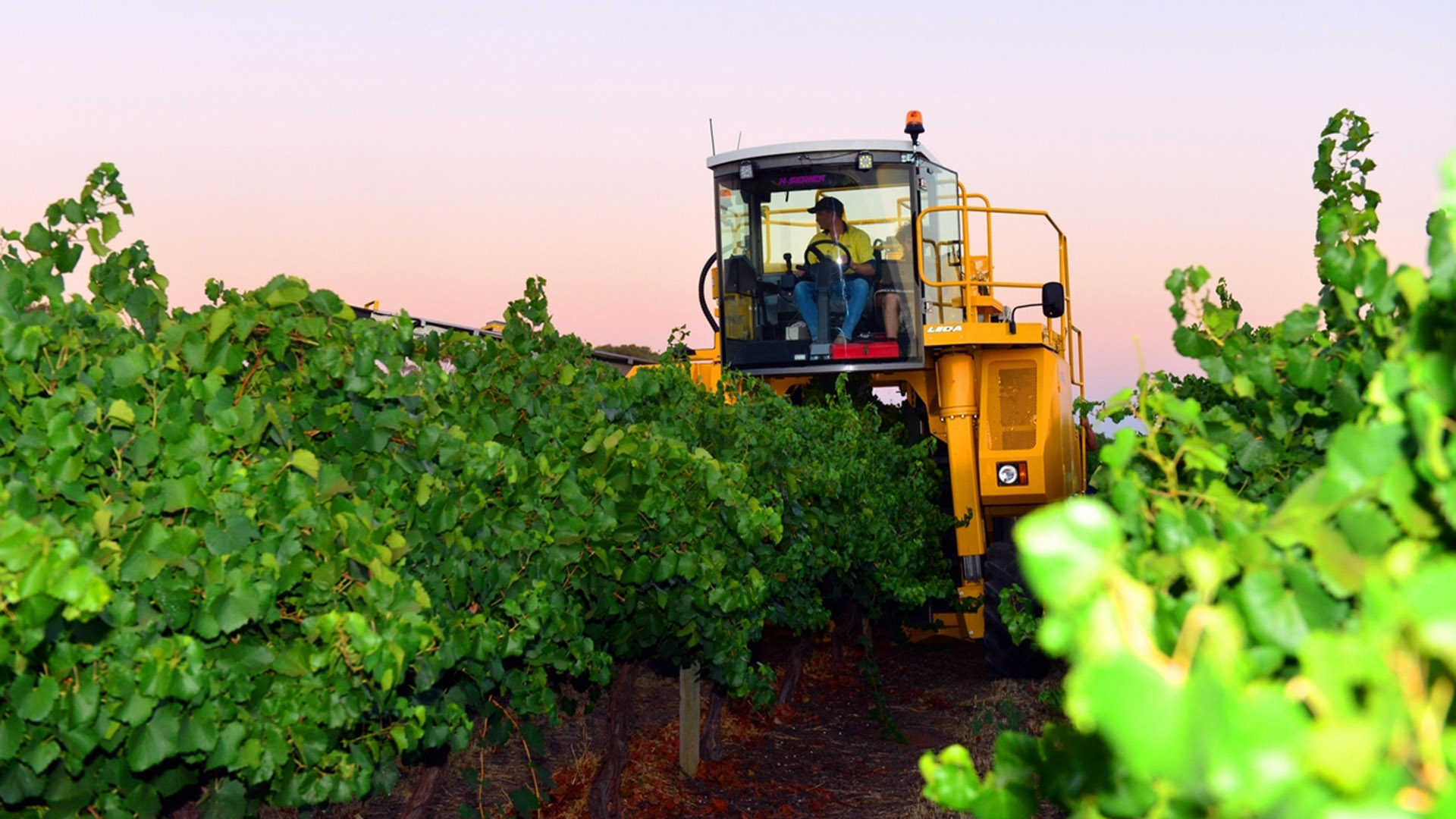
The Sunraysia food bowl is a dynamic agricultural basin part of the famous Murray-Darling wine region, which flourished with the arrival of irrigation in the late 1800s. And one company passionately supporting the viability and sustainability of the industry is LEDA Custom Farm Equipment. Established in 2000 by Damien “Henry” Higgins in Buronga, a small Murray River town lying on the opposite riverbank to Mildura, LEDA boasts a range of 15 different horticultural machinery products, including Australia’s only locally built self-propelled grape harvester.

On the back of its solid reputation in developing olive harvesters, LEDA’s expansion into mechanical grape harvesters began in 2008 when it manufactured two prototype tractor tow machines. Their success saw a full manufacture of further tractor tow machines in 2009 with its first self-propelled harvester, the H-Series P16 coming in 2013, after two years of extensive research and development.

The P16 incorporates the latest technologies with greater flexibility for custom programming. Mechanically, electrically and hydraulically sound, it’s powered by a Cat® C4.4 engine supplied with remote-mounted air, fuel and oil filters for ease of servicing the compact design. Being completely designed and built in Australia means it can withstand the tough conditions and varied terrain of the local vineyards and the Cat C4.4 engine gives the machine the power it needs without compromising on efficiency.

Cat®-powered Grape Harvesters Developed In The Murray-darling Region

The P16 is the most efficient way to harvest the fruit in the process known as vintage, one of the most crucial steps in winemaking. Mechanical harvesting of grapes was first introduced commercially in the 1960s and is a necessity in the harsh conditions faced in the Murray Darling summer harvest season.

“One of the benefits of mechanical harvesting is the relatively low cost,” says Henry.

“A harvester is able to run 24 hours a day and in hot climates like the Murray-Darling, where picking quickly or in the cool of night is a priority, mechanical harvesting is imperative.

“Engineered for Australia, the quality of our machinery is the sum of its components and for us, there was no better engine choice than Cat.”

“We have been dealing with EPSA since around 2011 and choose them because they are very easy to deal with and the support and the knowledge they give us is outstanding.”

This state-of-the-art machine is already in operation in the Murray-Darling and for wine customers in South Australia. A further three machines are scheduled for delivery this year.

EPSA And Cat® Support Three Generations Of Industry Machinery Developers

  • Agriculture / Aquaculture

The city of Bundaberg was largely built on its sugar industry. Extensive sugarcane fields, mills, refineries, and packaging and distribution plants all contribute to the city’s economy and one of its stalwarts is Greaves Enterprises who have almost 50 years of providing reliable, economic and efficient machinery to the region’s primary producers. And, since the very beginning, Cat® has been part of the Greaves family.

Launching the Greaves R-Series cane transporter with a Cat C9 engine in 2013, Cameron Greaves and his brother Ben form the third generation committed to the design and innovation of reliable machinery for the industry. Cameron works in the drafting office designing 3D models of machinery and Ben is a boilermaker.

“It is great that we still have all three generations contributing to the design process,” says Cameron. “My grandfather Merv was building equipment and machinery in the 1960s and was involved in the development of the early mechanical cane harvester and the first Greaves Transporter manufactured in 1969. My father Paul carried on the tradition and designed a new model Greaves Transporter in 1994. All our previous transporters were articulated machines, and in 2013 we designed and built the next generation—the R-series.”

The cane transporter receives billets (small pieces of harvested cane) that, when at capacity, run to a drop-off point of rail bins that are pulled by locomotive to the sugar mill. The Greaves advantage is that “we are the only self-propelled cane transporter manufacturer still left in Australia,” says Cameron.

“Our competition are tractors towing a trailer that don’t survive well in the harsh environment we operate in and many modern tractors have a short life expectancy and low resale value. We had one client who finally re-powered his three Greaves Transporters after 17 years of continuous service who says he would have been through at least nine tractors over this period. With minimal wearing parts and minimal downtime, more time is spent in field getting the job done.”

“The speed factor of the R-Series greatly helps with managing operating cost efficiencies because it can legally travel at speeds of 65 kilometres per hour, whereas most tractors have a top legal speed of 40 kilometres per hour. Comfort is also paramount in our design, providing a smoother ride and reducing fatigue for operators.”

The relationship between Greaves and EPSA dates back to the advent of EPSA but Greaves has been working with Caterpillar since the very beginning.

“My grandfather was putting Cat 3160 engines into cane harvesters in 1970 and Cat 3208 engines into the Greaves Transporter from 1972,” says Cameron.

“We trust Caterpillar as an engine and the service of EPSA. We need full confidence in our engines and service as the machine could go to the other side of the country, and we know Caterpillar’s serviceability will back up our product.”

EPSA’s Grant Taylor says it is great to support family businesses in regional Australia, explaining that small manufacturers like Greaves are creating jobs and driving innovation in primary production.

“The R-Series can also be used in other areas of farming and primary production as it was designed as a cab chassis to enable customers to place other equipment like chaser bins and liquid fertiliser manure spreaders,” says Grant.

The Greaves R-Series embodies a futuristic design with productivity-boosting features and advantages to deliver superior strength and rigidity without excess weight. It is powered by a Cat 300 horsepower C9 engine that boasts excellent power-to-weight ratio to improve turnaround times.