Responding To Power Insecurity

  • Agriculture / Aquaculture

The Federal Government recently announced a $36 million program to pay households and businesses to turn down their air conditioning, furnaces and cool rooms during peak demand. This, combined with skyrocketing power prices and grid instability are sure signs of a power crisis in Australia. As Victoria, NSW and South Australia look to measures to prevent blackouts this summer, among the many trial projects, householders will be invited to voluntarily cut their energy use in return for incentives such as rebates on electricity. Other projects involve large-scale industrial and commercial businesses that will have hardware installed to automatically and remotely control and reduce energy. The Australian Energy Market Operator (AEMO) says there are opportunities for the energy sector to assist consumers through more targeted products and services, particularly in relation to managing their energy use during uncertain power supply. Among other strategies, this could potentially require investment in power generation options to ensure reliability and security of supply. EPSA is ready to respond and take action.

EPSA’s Senior Manager for Engines, Rental and Project Marketing, Marcel Heijkoop says, “At EPSA, we’re at the forefront of supporting businesses – large and small – and we’ll help customers prepare for what’s forecast to be a turbulent summer. “Our Cat® prime and standby power generators are available for hire or purchase as new or used and they suit any business or application backed by cutting-edge technology. We’re currently offering $21,000 (inc GST) genset packages fully installed and commissioned with Cat Finance packages for ABN holders.

“We also offer reliable HVAC equipment for temperature control – crucial for productivity, efficiency and safety in the workplace.”

Should businesses be adversely affected by brownout, blackout or summer storm, EPSA can supply emergency power immediately. EPSA provide urgent equipment 24/7 to minimise downtime during any unplanned outages.

EPSA Appoints New Managing Director

  • Staff
EPSA Appoints New Managing Director Chris-Murray

Energy Power Systems Australia (EPSA) is pleased to announce the appointment of Chris Murray as its new Managing Director, effective Tuesday 23 October 2018.

EPSA’s Board of Directors are pleased to secure Chris in this role. He brings with him vast executive experience in the mining and energy sectors, including renewables, resources, and project development both in Australia and internationally. This appointment complements EPSA’s focus as it responds to emerging changes in the energy sector, including decentralised hybrid power solutions and responsive rapid rental deployment.

EPSA will continue to focus on delivering successful customer solutions whilst providing them with a positive customer experience. This commitment will continue to strengthen as Caterpillar’s products and solutions evolve to meet a changing and competitive landscape.

The Board of Directors acknowledge Phil Canning, EPSA’s former Managing Director, and his positive contribution over the last fourteen years.

Caterpillar Named One Of Fortune’s World’s Most Admired Companies In 2018

  • Branding

We are proud to be a part of a company named to Fortune’s World’s Most Admired Companies® 2018 list. This year, Caterpillar is ranked number 43. Caterpillar has appeared in the Top 50 All-Stars list for 17 consecutive years.

“We welcome this recognition as one of the world’s most admired companies,” said Caterpillar CEO Jim Umpleby. “This honor belongs to our people, the dedicated Caterpillar employees who help our customers build a better world.”

To determine the Top 50 All-Stars, Korn Ferry Hay Group asked the respondents to select the 10 companies they admired most. Unlike with the industry rankings, respondents could pick any company in any industry while selecting their top 10 companies. We’re honored to have been included in many respondents’ top 10 lists.

Visit fortune.com to see the full list of the World’s Most Admired Companies.

EPSA Customise Cat® Gensets For Tassal’s Salmon Farming Needs

  • Agriculture / Aquaculture

Tasmanian Atlantic salmon thrive in the pure cool waters of one of the most pristine environments in the world, and salmon farms – circular pens supporting fishnets – are a common sight in the state’s waterways. EPSA’s Cat® Rental Power division supply XQE gensets to salmon producer Tassal for power generation on four of its fish farms.

Tassal says that preserving the marine environment and appropriately managing the visual impacts of its operations is imperative. This includes ensuring that equipment complies with regulations, with all floating infrastructure associated with the farming operations to be grey or black in colour. EPSA has been working with Tassal for two years and historically have painted our gensets grey to meet this requirement, and then re-paint at the end of each tenure, says EPSA’s Rental Branch Manager, Tas Topalidis.

“We do this to meet regulations to camouflage equipment so it is in harmony with its environment, and to avoid the gensets looking like a white beacon in the middle of the ocean.”

Tas says that the process was expensive and he sought to find a most cost-effective and innovative solution.

“Having previously worked in the rail industry, I knew the viability of vinyl covering on trains for advertising purposes and knew it was a durable enough material to hold up to weeks at sea and then be peeled off the gensets at the end of the project period. I proposed the idea to Tassal and we rolled out the first vinyl-covered gensets in April 2014. The feedback from Tassal was incredible.”

Caterpillar Named One Of Fortune's World's Most Admired Companies

If opportunities are the lifeblood of business, then it must be our people who are the most important component to shape success, says Steve Adamson, National Sales Manager for EPSA’s Rental division.

“An initiative such as this demonstrates the capabilities of EPSA people to deliver the best possible customer service and regional representation.”

Aquaculture is one of the fastest growing areas of food production in the world. According to the Tasmanian Seafood Industry Council, the farming of both Atlantic salmon and ocean trout in the Tasmanian marine environment has developed into the most valuable seafood industry in Australia, producing in excess of 48,000 tonnes per annum. Tassal is a leading producer of Atlantic salmon in Australia. It operates two salmon hatcheries, three processing facilities, two retail outlets and marine farms in six regions throughout Tasmania.

Cat®-powered Grape Harvesters Developed In The Murray-darling Region

  • Agriculture / Aquaculture

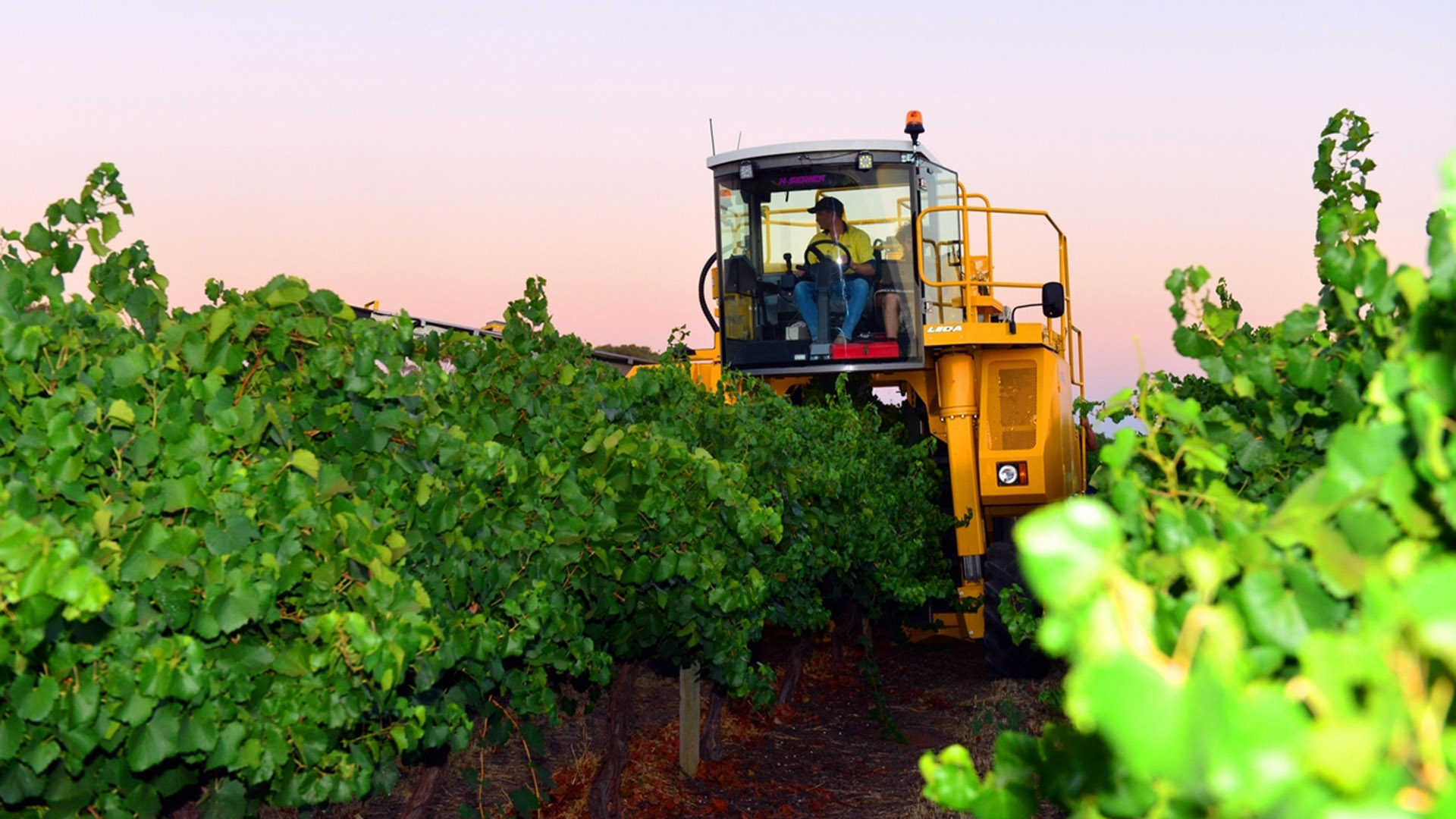
The Sunraysia food bowl is a dynamic agricultural basin part of the famous Murray-Darling wine region, which flourished with the arrival of irrigation in the late 1800s. And one company passionately supporting the viability and sustainability of the industry is LEDA Custom Farm Equipment. Established in 2000 by Damien “Henry” Higgins in Buronga, a small Murray River town lying on the opposite riverbank to Mildura, LEDA boasts a range of 15 different horticultural machinery products, including Australia’s only locally built self-propelled grape harvester.

On the back of its solid reputation in developing olive harvesters, LEDA’s expansion into mechanical grape harvesters began in 2008 when it manufactured two prototype tractor tow machines. Their success saw a full manufacture of further tractor tow machines in 2009 with its first self-propelled harvester, the H-Series P16 coming in 2013, after two years of extensive research and development.

The P16 incorporates the latest technologies with greater flexibility for custom programming. Mechanically, electrically and hydraulically sound, it’s powered by a Cat® C4.4 engine supplied with remote-mounted air, fuel and oil filters for ease of servicing the compact design. Being completely designed and built in Australia means it can withstand the tough conditions and varied terrain of the local vineyards and the Cat C4.4 engine gives the machine the power it needs without compromising on efficiency.

Cat®-powered Grape Harvesters Developed In The Murray-darling Region

The P16 is the most efficient way to harvest the fruit in the process known as vintage, one of the most crucial steps in winemaking. Mechanical harvesting of grapes was first introduced commercially in the 1960s and is a necessity in the harsh conditions faced in the Murray Darling summer harvest season.

“One of the benefits of mechanical harvesting is the relatively low cost,” says Henry.

“A harvester is able to run 24 hours a day and in hot climates like the Murray-Darling, where picking quickly or in the cool of night is a priority, mechanical harvesting is imperative.

“Engineered for Australia, the quality of our machinery is the sum of its components and for us, there was no better engine choice than Cat.”

“We have been dealing with EPSA since around 2011 and choose them because they are very easy to deal with and the support and the knowledge they give us is outstanding.”

This state-of-the-art machine is already in operation in the Murray-Darling and for wine customers in South Australia. A further three machines are scheduled for delivery this year.

EPSA And Cat® Support Three Generations Of Industry Machinery Developers

  • Agriculture / Aquaculture

The city of Bundaberg was largely built on its sugar industry. Extensive sugarcane fields, mills, refineries, and packaging and distribution plants all contribute to the city’s economy and one of its stalwarts is Greaves Enterprises who have almost 50 years of providing reliable, economic and efficient machinery to the region’s primary producers. And, since the very beginning, Cat® has been part of the Greaves family.

Launching the Greaves R-Series cane transporter with a Cat C9 engine in 2013, Cameron Greaves and his brother Ben form the third generation committed to the design and innovation of reliable machinery for the industry. Cameron works in the drafting office designing 3D models of machinery and Ben is a boilermaker.

“It is great that we still have all three generations contributing to the design process,” says Cameron. “My grandfather Merv was building equipment and machinery in the 1960s and was involved in the development of the early mechanical cane harvester and the first Greaves Transporter manufactured in 1969. My father Paul carried on the tradition and designed a new model Greaves Transporter in 1994. All our previous transporters were articulated machines, and in 2013 we designed and built the next generation—the R-series.”

The cane transporter receives billets (small pieces of harvested cane) that, when at capacity, run to a drop-off point of rail bins that are pulled by locomotive to the sugar mill. The Greaves advantage is that “we are the only self-propelled cane transporter manufacturer still left in Australia,” says Cameron.

“Our competition are tractors towing a trailer that don’t survive well in the harsh environment we operate in and many modern tractors have a short life expectancy and low resale value. We had one client who finally re-powered his three Greaves Transporters after 17 years of continuous service who says he would have been through at least nine tractors over this period. With minimal wearing parts and minimal downtime, more time is spent in field getting the job done.”

“The speed factor of the R-Series greatly helps with managing operating cost efficiencies because it can legally travel at speeds of 65 kilometres per hour, whereas most tractors have a top legal speed of 40 kilometres per hour. Comfort is also paramount in our design, providing a smoother ride and reducing fatigue for operators.”

The relationship between Greaves and EPSA dates back to the advent of EPSA but Greaves has been working with Caterpillar since the very beginning.

“My grandfather was putting Cat 3160 engines into cane harvesters in 1970 and Cat 3208 engines into the Greaves Transporter from 1972,” says Cameron.

“We trust Caterpillar as an engine and the service of EPSA. We need full confidence in our engines and service as the machine could go to the other side of the country, and we know Caterpillar’s serviceability will back up our product.”

EPSA’s Grant Taylor says it is great to support family businesses in regional Australia, explaining that small manufacturers like Greaves are creating jobs and driving innovation in primary production.

“The R-Series can also be used in other areas of farming and primary production as it was designed as a cab chassis to enable customers to place other equipment like chaser bins and liquid fertiliser manure spreaders,” says Grant.

The Greaves R-Series embodies a futuristic design with productivity-boosting features and advantages to deliver superior strength and rigidity without excess weight. It is powered by a Cat 300 horsepower C9 engine that boasts excellent power-to-weight ratio to improve turnaround times.

Cat’s® First Solar Plant In Action On Australian Soil

  • Renewable Energy

11,040 Cat® PV solar modules are mounted on fixed axis steel frames contouring the challenging terrain of the Adelaide foothills. In this innovative first-of-its-kind project combining solar and methane gas in an energy production farm, Energy Power Systems Australia (EPSA) was engaged by Joule Energy (a wholly-owned subsidiary of LMS Energy) in their partnership with Northern Adelaide Waste Management Authority (NAWMA). EPSA provided a turnkey solution comprising engineering, design, construction and commissioning for the 1.15MW (ac) PV solar plant, which is utilising the unused portion of land next to the Uleybury Landfill site as a solar farm. The plant captures energy from the sun and converts it directly to DC power. A solar inverter then converts the power to AC electricity. The power is then exported to the national grid through an interconnect shared with the Cat® gas genset. The waste creates methane gas formed by the breaking down of organics in the garbage and the Cat® gas generator converts this methane into electricity that’s been successfully exporting green energy into the South Australian grid since it was commissioned in late-October 2017.

The collective electricity generated from both the landfill gas and solar sources is expected to be over 11,000 megawatt hours per annum of renewable energy – enough to power more than 1,900 homes in South Australia 24/7.1 When compared to a traditional coal-fired power station generating the same amount of electricity, the NAWMA renewable energy facility will save approximately 24 million litres of water each year and prevent the emission of around 63,500 tonnes of carbon.
The PV solar modules are arranged into 46 mini power blocks each feeding a dedicated 25kW (SMA) inverter, says EPSA’s Microgrid & Hybrid Segment Manager, Ron Hall.

“The strings are then combined into three separate arrays, with AC output from each collected to supply the EPSA-supplied HV transformer kiosk. The kiosk transforms the voltage to 11,000V AC for supply to the grid via the client-operated power station. Control of the plant is achieved using the 4G wireless network to communicate between the power station and a Cat® (SMA) Cluster Controller, which relays the information back and forth to each of the 46 inverters. The controller includes a web-connected online portal to provide the client with up-to-date information on the solar plant status including current plant output, daily yield and alarms.

“Since this solar plant is exporting to the grid, the grid voltage is effected with higher export values. To counter the ever-growing problem of grid voltage stability, the solar plant is able to dynamically change the output power factor to import or export 100 per cent of the plant’s output in reactive power in a trade-off for active power meaning that the plant can help stabilise the local grid voltage throughout the day.”

Landfills have very little utility once capped, due to issues of land settlement and landfill gas, making them ideal locations for solar development. Solar generation systems on landfills, and adjacent buffer zones, provide an economically viable reuse for sites that may have significant clean-up costs and little potential for commercial or residential redevelopment. Installing such systems, does present a series of unique challenges.
EPSA are at the forefront of working with innovative organisations committed to the development and facilitation of renewable sources of energy alternative ways to provide power generation – especially at a time when energy prices and grid stability are so precarious, says Managing Director, Phil Canning.

“We’re also proud to be associated with Caterpillar® and deliver Cat® power systems. Caterpillar® is continually researching, developing and delivering purposefully alternative energy gas generation products and are leading the integration of renewable power with smart energy storage and conventional diesel or gas-fuelled power generation.”

Smart Waste

  • Industrial & Waste

According to the CRC CARE, a government-funded research and development organisation, there are more than 160,000 potentially contaminated sites in Australia.

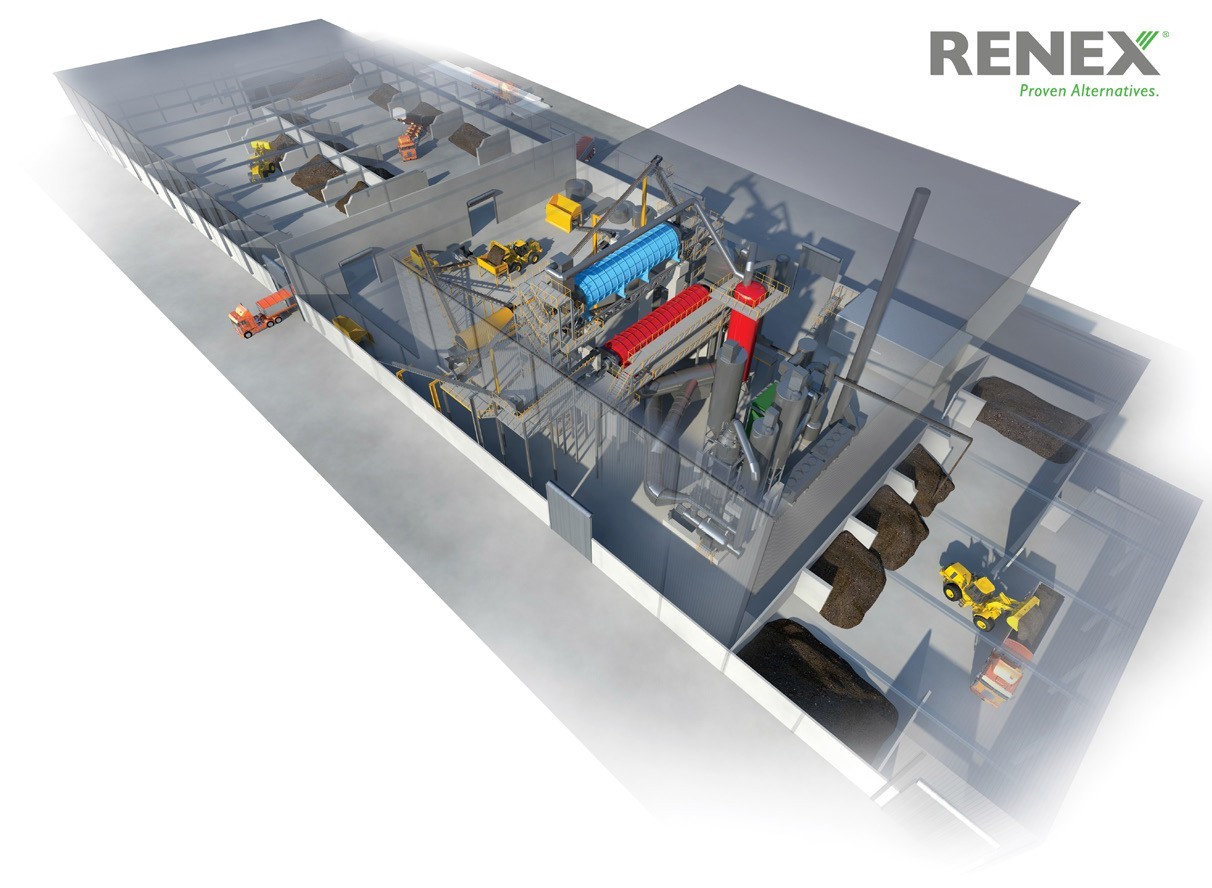
RENEX, the company behind Australia’s first permanently located contaminated soil treatment and resource recovery facility, was specifically established to accept and treat contaminated soils and other industrial waste that would otherwise have been destined for landfill disposal. Richard Jeffares, RENEX’s Business Development Executive, says that RENEX extensively evaluated several thermal technologies and found that pyrolysis rotary kiln technology was the safest, cleanest and most reliable for its needs.

Richard explains the process: “Pyrolysis is the thermochemical decomposition of organic material at elevated temperatures in the absence of oxygen (or any halogen) and is an irreversible process. The waste is not in contact with flame or combustion gases and the soil structure remains intact post-treatment with maximum re-use potential.

“In addition, the risk of combustion is eliminated and there is minimal risk of dioxin formation because of the oxygen-free environment. “In fact, the plant boasts extremely high energy efficiency, as the treated materials provide energy for operating the plant and can treat very high organic contaminant loads,” Richard adds, noting it can also treat volatile metals like mercury and accept a wide variety of matrices (solid, sludge, liquid).

The state-of-the-art facility meets the latest and most stringent environmental regulations and is equipped with hardware that fully complies with the highest international operating standards. It delivers significant benefits over other facilities, including a plant capacity of 70,000 tonnes per annum, says Richard.

Smart Waste1

EPSA has supplied RENEX with an enclosed Cat® C15 (rated at 550 kVA standby) as the backup generator for the facility, an element that Tristan Roberts, RENEX’s General Manager, describes as “of critical importance”.

”If we do experience any power outages, the generator will provide emergency power to bring our plant to a safe state. The reliability of this backup generator is a big factor for us, as sudden temperature changes could cause significant damage and the cost to replace would be in the millions
of dollars.”

EPSA’s National Business Manager EP – Retail, Dave Cronin says the Cat C15 “exceeded the expectations of RENEX from a technical perspective. Our engineering team were heavily involved with testing to ensure the genset would perform as expected. “It was a collaborative effort by all parties to ensure the genset was the right unit for the installation,” he adds.

Richard says the first soil was turned onsite in September 2012 for the construction of the 11,000 square metre fully enclosed building, with the installation of the pyrolysis rotary kiln technology getting underway in late 2013. RENEX acknowledges support from Victoria’s HazWaste Fund for the facility.

Says Richard: “We received approval from the Environmental Protection Authority (EPA) Victoria in November 2013 to commence receiving and storing contaminated soils in preparation for treatment. Twelve months later we received the required approval to commence our ‘Proof of Performance’ program. We are on schedule to be fully operational
by mid 2015.”

“We are proud to work with a company that has committed to developing and implementing clean technology solutions to eliminate hazardous wastes,” adds Dave.

“What RENEX has done contributes to the long-term health and benefits of local communities and the trusted name of Cat will certainly support them in this quest.”

Combatting Energy Poverty With Coconut Oil Solution

  • Renewable Energy

Energy Power Systems Australia (EPSA) have long been committed to supporting renewable energy advances and were integral to an innovative project in the Pacific Islands that instigated power generation by coconut oil. In 2013, EPSA supplied Cat® generators for coconut oil-fuelled power generation on the Pacific Island nations of Timor-Leste and the Solomon Islands. The used generators were part of a project to power two remote villages with no access to the utility grid. EPSA worked with Queensland-based Raw Power Systems (RPS) and Solomon Tropical Products in the Solomon Islands on the project – an initiative of the Secretariat of the Pacific Community (SPC) and funded by the European Union. SPC is an international NGO helping Pacific Island nations achieve sustainable development and agricultural enhancements. Coconut oil is environmentally friendly and sustainable with virtually zero emissions, said RPS Director Sandy Kelly.

“We developed an effective and compact system that enables diesel generators to operate reliably on 100 per cent coconut and other vegetable oils, and EPSA was our first choice as a partner to help implement this clean energy solution. The outstanding quality of Cat and EPSA’s renowned customer service was crucial to the project’s viability and success.”

“As emerging economies, energy poverty is widespread – it is estimated that 70 per cent of Pacific Islander households do not have access to electricity, resulting in a high dependency on expensive imported diesel for fuel, said EPSA Business Development Manager, Chris Sanderson.“The capacity to use coconut oil as fuel is crucial to the economic development of both countries. In addition to supplying areas without power, the coconut by-products also give villagers other opportunities to earn revenue.”

Long referred to as the “tree of life”, the coconut is an underestimated crop with potential for the entire plant to support local economic development, adds Sandy.

Chris says that by using existing resources, real tangible benefits can be delivered.

“Locally produced coconut oil reduces the requirement for expensive imported fuel, thus providing lower energy costs. And, unlike depleting fossil fuels, it is a renewable energy source. Coconut oil for industrial power is virtually free energy as the coconuts can be harvested and processed locally. Any village can install a small system to provide power with an average usage of only three coconuts per kilowatt hour.”

The use of vegetable oils to power diesel is not new. Inventor Rudolf Diesel ran his original engine on peanut oil, while coconut oil was used in the Philippines during WWII when diesel was in short supply. Today, coconut is the world’s most extensively grown and used nut. The harvesting of coconuts and production of the oil and other by-products will drive rural development and employment. The beauty of this system is that it can be run on any vegetable oil, opening the doors for development in many industries in the future, something that EPSA are keen to continue to support.

EPSA Assumes Distribution Of MWM And Cat® Cg Gas Products

  • Oil & Gas Petroleum

In April 2013 Cat® Rental Power was awarded the honour of being Caterpillar’s best Rental Power Division worldwide after a very thorough Rental Operations Review. Energy Power Systems Australia’s (EPSA) Cat Rental Power is the first-ever Caterpillar® Certified 5 Star Cat Rental Power business.

“Through Caterpillar’s leadership, EPSA adhere to high standards in our daily operations with best-practice processes and procedures, focusing on business growth, financial performance and operational excellence,” explains Marcel Heijkoop, National Sales Manager for EPSA’s Rental Division.

“This award is recognition of our achievements, and we thank Caterpillar for their endorsement,” says Marcel in response to this first-ever honour.

EPSA, with assistance from Caterpillar, better defined their strategic direction in the Rental Power business, and benchmarked themselves against some very professional Cat Rental Power businesses around the globe. This five star review made EPSA’s Rental business more resilient to worldwide trends and current business pressures.

“We’re customer-oriented, we better meet the needs of our customers through our upgraded branches and facilities, CRM systems, seamless operation, excellent staff, and of course, Cat® powered products,” Marcel says proudly.